AaltoSiilo, Oulu | September 2–5, 2026
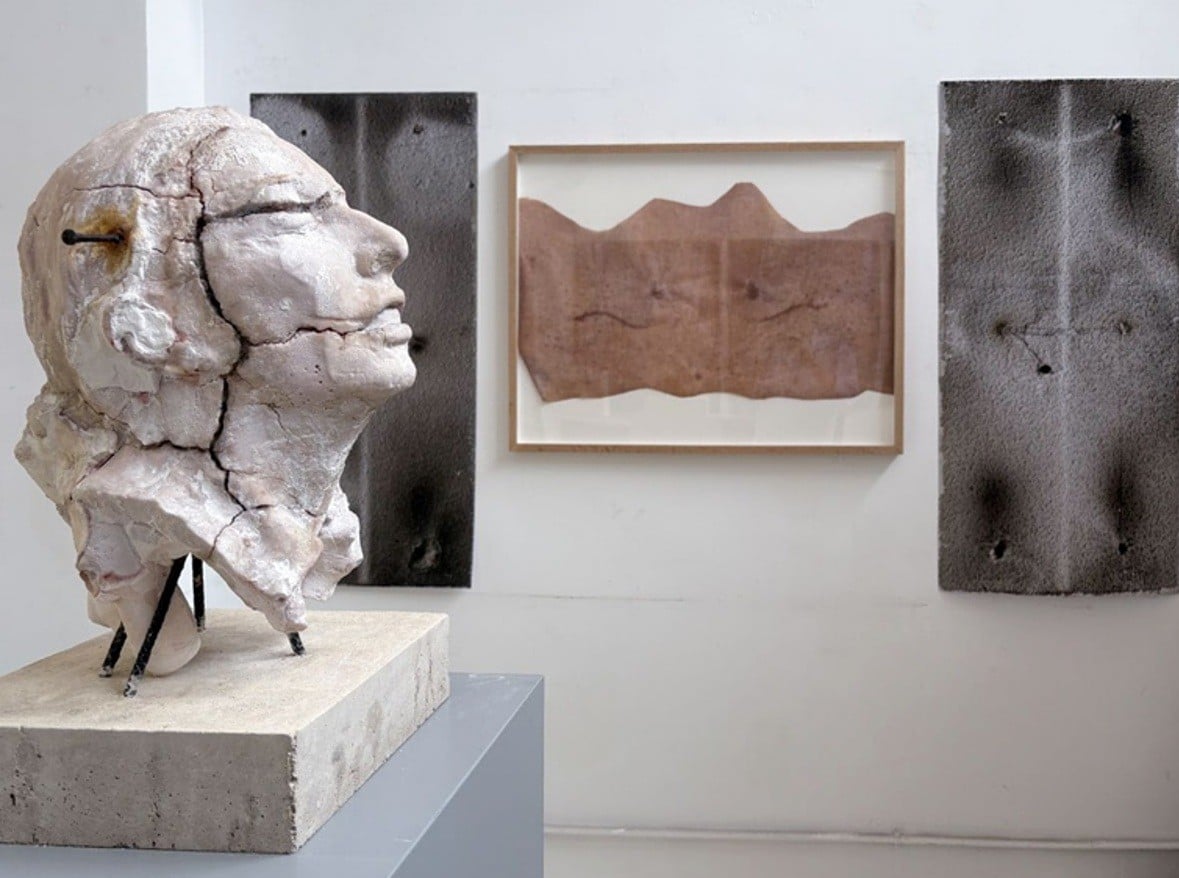
This exhibition is the result of many years of close collaboration between Marina Abramović, Adam Lowe and the team at Factum Arte, the Madrid-based art workshop, including Sol Costales and Irene Gaumé. It is curated and produced by Factum Arte, specifically for AaltoSiilo, within the Oulu 2026 European Capital of Culture framework. The Exhibition presents new works by Marina Abramović, one of the most influential figures in contemporary art since the 1970s. A pioneer of performance that engages the body, endurance, time, re-performance and audience participation. The exhibition will reveal new and previously unseen works that have been evolving for some time. The show includes ten framed works based on the artist’s skin using innovative printing methods, a cast salt sculpture of the head of Marina Abramović that laments the Baltic becoming a brackish sea, glass tears, alongside miniatures based on iconic images from some of Abramović’s most celebrated performances. During the exhibition we will be screening Seven Deaths of Maria Callas (120min, 2020), in which Marina enacts the death scenes performed by Maria Callas in seven different operas.
This exhibition is a gift to the Baltic from Marina Abramović and Factum Arte. Skin, Salt and Tears reveals a deep, intuitive and poetic side of Marina Abramović:
Skin: Marina offers her own skin to Oulu2026 – the European Capital of Culture. As the climate changes, human skin becomes a metaphor for protection against the cold and other dangers. It is a poetic gesture by an artist famed for her cathartic and emotional performances, but one that also resonates with the myth of Marsyas.
Marsyas performed on his pipes so beautifully that it was only when Apollo added his voice to the sound of his lyre that the Muses judged him superior – as a result, Marsyas was skinned on the instructions of Apollo and his skin was nailed to a pine tree. Skin becomes both protection and an expression of vulnerability.
Salt: Salt connects the work to the changing Baltic, which is becoming increasingly brackish. Some freshwater fish can now live in the sea. The cast head in the exhibition cracked as it cooled, but the cracks revealed a fragility that Marina has celebrated. It also acquired a pinkish tone similar to the artist’s flesh colour. The skins and the
salt belonged together.
Tears: Marina’s tears have been captured in glass. Tears of hope and of sadness. The tears of sadness are for Venice where the rising sea level is threatening the foundations on which Venice is built. Marina is currently exhibiting Transforming Energy at the Gallerie dell’Accademia, from 6 May to 19 October 2026, coinciding with the 61st Venice Biennale and marking her 80th birthday. She is the first living woman artist to be honoured with a major exhibition at the Gallerie dell’Accademia, with works installed across both the permanent collection and temporary exhibition spaces. The same was true at the Royal Academy in London, where in 2023 she became the first woman artist to have a solo exhibition in the institution’s Main Galleries. The tears of hope are for Oulu, where the opposite movement is taking place: as a result of post-glacial rebound, the land is rising faster than the sea level. Marina has been focused on long-duration performance – and both cities reveal, on a different scale, a long and complex relationship between culture and nature. Venice may come to represent the past; Oulu could help shape the future. While the President of the United States focuses his interest on Greenland, the world’s attention is being drawn to the edge of the Arctic Circle where things are changing fast. Oulu is perfectly placed to act as a focal point for these changes.
And an additional element:
Electrostatic: Along with these three groups of works, the exhibition will include a series of prints of a ready made phenomenon. For many years, Marina and Factum have been experimenting with electricity. As with so many works of art, the idea can find its form in surprising ways. The industrial strip lights in Factum were removed some years ago, but the traces of electrostatic charge remained where the dust had built up, forming poetic traces reminiscent of Yves Klein’s Anthropometry paintings – rather than a moment in time, these images were formed as the residue of an attraction that took place over an extended period of time.
Marina Abramović at AaltoSiilo:
All the works have been made to help draw attention to the AaltoSiilo. Five years ago, the Silo, Alvar Aalto’s first industrial building, a concrete cathedral used for storing wood chips, was about to be demolished. Factum Foundation and Charlotte Skene Catling stepped in! Five years later, working closely with the City of Oulu, it has become a beacon of hope in one of the areas of the world where climate change is most visible.
The Silo is now part of the New European Bauhaus. It is transforming Meri-Toppila, a problematic, post-industrial suburb of Oulu, home to hundreds of refugees from Syria, Sudan and other war-torn parts of the world. It is also the home of the Oulu Protocol, which has become a legacy project growing out of the European Capital of Culture.
Marina Abramović emerged from Tito’s Yugoslavia and into the radical world of Amsterdam and Bologna in the 1970s. She makes herself vulnerable so others can share her vulnerability. She has endured pain and absorbed emotional projections. Now in Oulu she is doing something poetic… it may seem like Oulu is on the margins. Like Marina, it is rapidly becoming central.
CONTACT FOR MORE INFORMATION AND IMAGES
AaltoSiilo Ry:
Valentino Tignanelli – mailto:valti.tigna@factumfoundation.org
Factum Foundation:
Nicolas Béliard – mailto:nicolas.beliard@factum-arte.com
Giulia Fornaciari – mailto:giulia.fornaciari@factum-arte.com