A collaborative project by the Artists’ Association MUU ry, the Cultural Magazine Kaltio, and Oulu 2026 European Capital of Culture presents participatory and experimental artworks over six weeks in 25 cities along the E75 route.
11 countries, nine artists, and 11,000 km on a bus. The E75 is a European artery connecting people from Northern Europe to the Mediterranean.
Already in the first days on the bus, it becomes clear that nothing happens in isolation from its surroundings. Roads, borders, service stations, and cities become part of the artists’ material. Cameras record continuously, and Instagram stories stretch into diaries. Between the bus seats accumulate plants, jars of paprika and eggplant preserves, halva, instant porridge packets, and hipster beers. Drivers Timo Tuovinen and Mika Hämäläinen steer a bus, strikingly taped with E75 Art Bus logos, through multiple language regions and administrative cultures. Carrying works that exam democracy, the future, and the conditions for peace, we cross Hungary three days after the elections, as the last campaign posters still lean in the fields
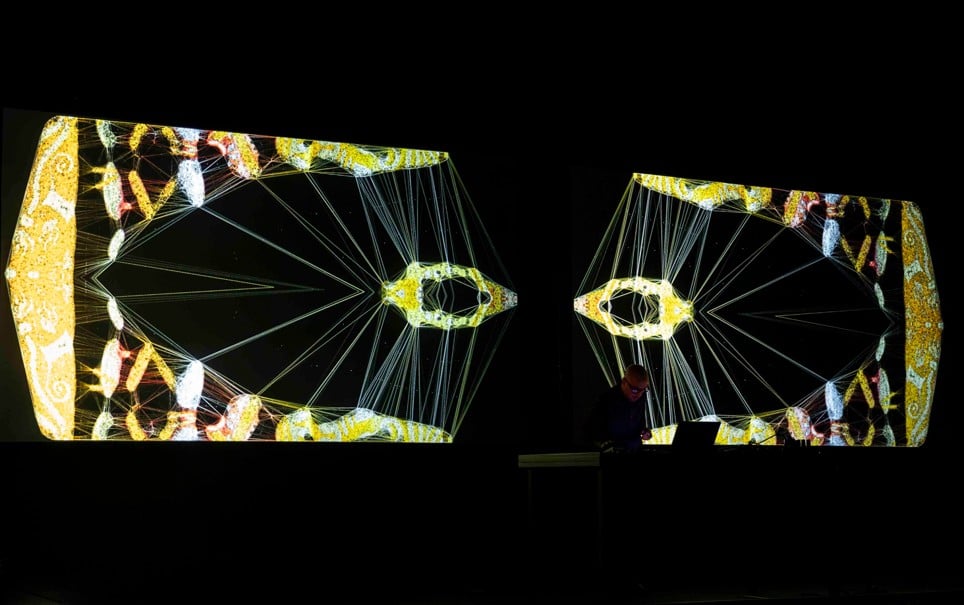
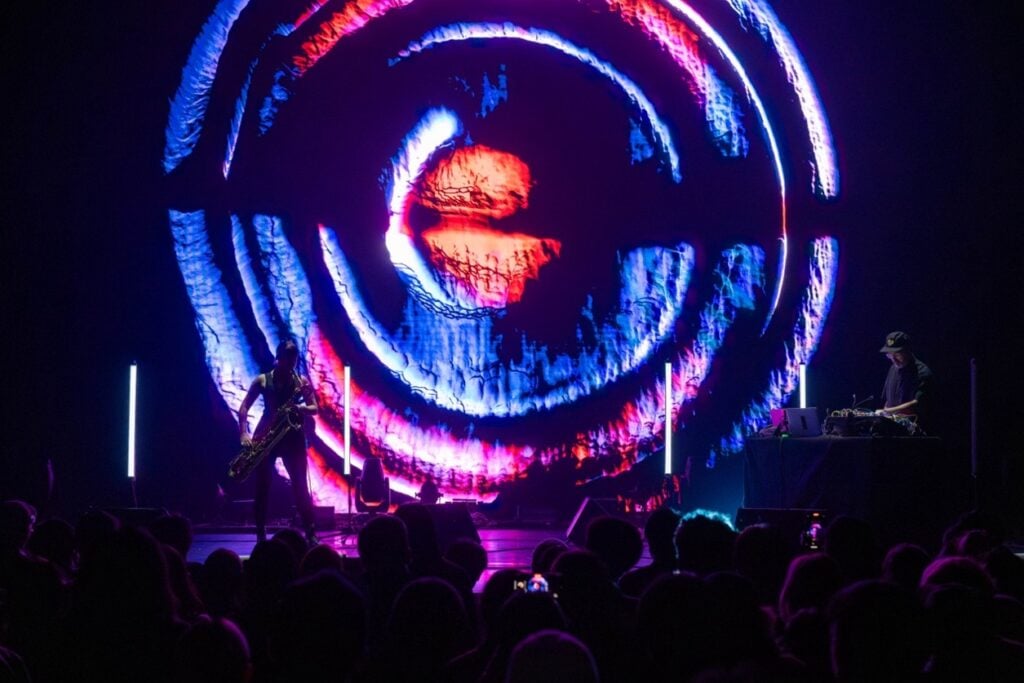
Halfway through the return journey – perhaps in Czechia – at one of the many generic service stations, we reflect on the experience, and every artist speaks of encounters. Filmmaker Balbina Bochuzynska talks about people running small-town art organizations out of love for their work –and exhausted by that same love. Sound artist Tianjun Li recalls an evening in Trenčín with Korean youth, whose sense of rootlessness resembled the birds in his own performances – projected or real, like the bird that wandered in a Greek chapel.
A border-crossing art bus is in itself a statement in a world where mobility is a privilege for some and a necessity for others. The avant-garde artists of the 20th century also fled censorship through travel: Dadaists from Zurich to Paris, Constructivists from Moscow to Berlin, Surrealists from Marseille to Mexico. Serbian artist and curator Sunčica Pasuljević Kandić calls her “story bench,” loaded into the luggage compartment in Ii, a nomad. By pressing your ear against it, you can hear the gnawing of insects. Through tea picnics with local residents, she attempts to preserve endangered oral traditions.
The works curated for the art bus include interventions, installations, films, and workshops. During a residency in Ii prior to the journey, Polena Kolia Petersen created a magical dance piece inspired by spells, dealing with power structures and ecological catastrophe. In a park bursting into summer in Novi Sad, she invites evening passers-by to improvise. Ceramic artist Saara Kumpulainen, meanwhile, collects sorrows into a hand-blown glass bottle at Gallery SULUV. At the southern end of the E75, in Siteia, crystallized sorrow was sprinkled into the Mediterranean from tissue-thin bowls as sunbathers looked on in wonder. The sorrows gathered on the return journey will be given a ceremonial ritual on May 16 on the shore of the Arctic Ocean in Vardø.
Multidisciplinary artist Eeva-Liisa Puhakka carries a copper distillation apparatus sealed with rye dough, with which she creates scents from materials gathered in different cities. In Novi Sad, art students brought items such as horse chestnuts, a slice of pizza, a balloon, and rosemary for distillation. Opening a brown bottle labeled Elefsina reveals a hint of lemon in the scent. In media artist Sjors Hoogerdijk’s installation, the audience feeds words into sound loops that echo and transform. Someone clicks their tongue, another dares to sing into the microphone, modulating themselves into a choir.
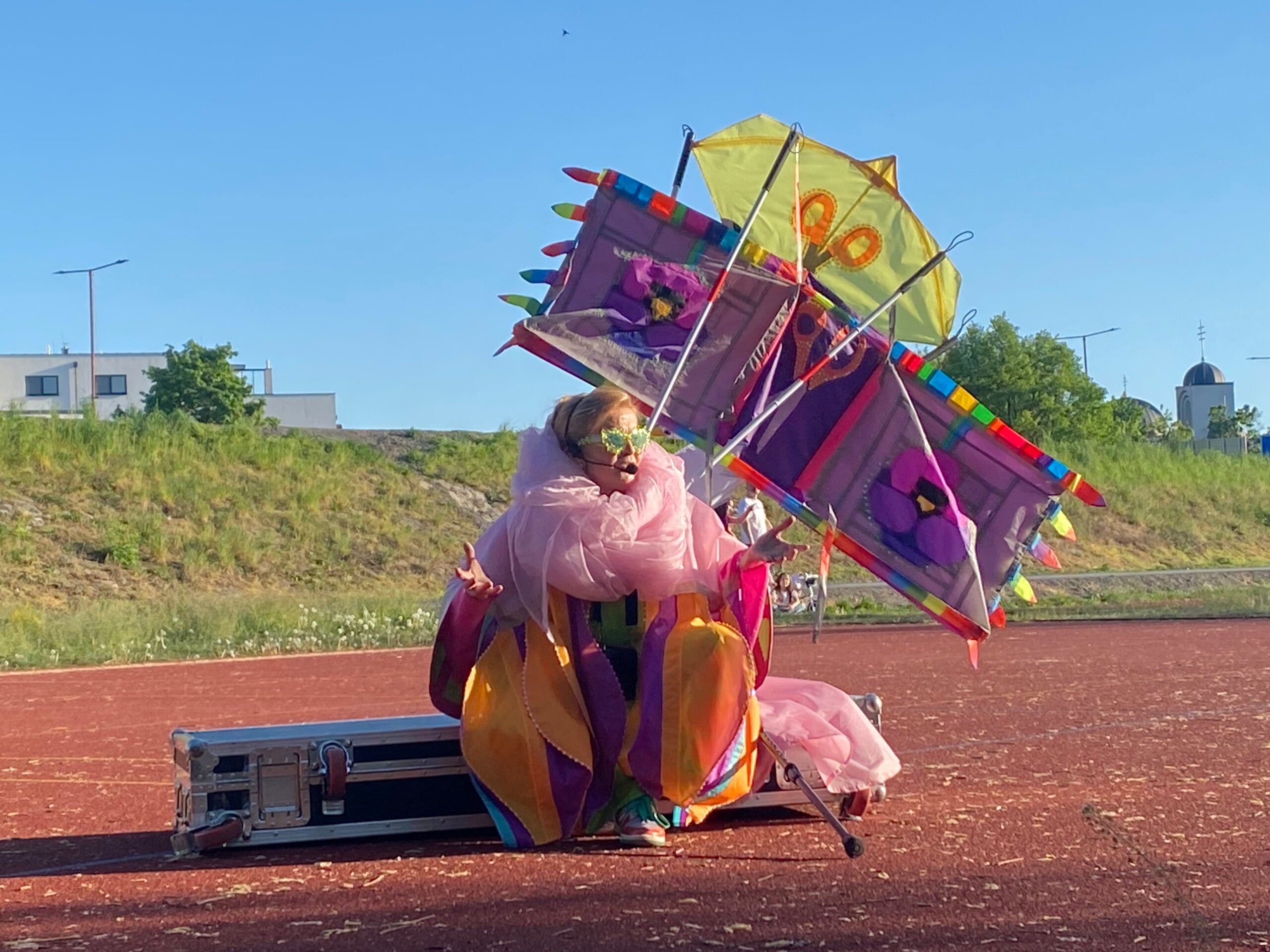
I ride through the streets atop my enormous wheeled suitcase, searching for wind for disabled kites. In still weather, I speak to people about memory and accessibility as vital conditions for minority cultures.
One by one, everyone in the group forgets what happens next or by what number should the local price of a bag of nuts be divided in North Macedonia, Serbia, or Hungary to understand it in euros? We relearn how to queue – for the toilet, the shower, a turn to speak, and at border crossings.
Despite the closeness, the bus also creates bubbles of two seats – compartments defined by headphones or sleep. Outside the EU, signs of data fasting emerge. We move along a planned, asphalt-controlled route from place to place, yet the body sometimes lags a day behind. After 700 kilometers, the street sways like after a sea voyage. At Paleta Prostor, we found peer support from Sinisa Ilic, who had sailed the entire Danube on a modular raft with an artist group.
The longest-running work of the E75 art bus is the exhibition Magnus by Taiwan-born Yu-Hsuan Yao, about an AI that proposes artworks. It is on view from April 15 to June 25 at Malý Berlín in Trnava. Authorship, collaboration, and obedience blur in the installation, much like on the art bus itself. In a way, the intensity of shared travel also neutralizes: small conflicts turn into “dialogue,” asymmetries into “collaboration.”
From the dark evenings of Central Europe, it is now only a couple of weeks to the midnight sun. The E75 Art Bus invites brave art lovers and adventurers to hop on board from Oulu, European Capital of Culture 2026, on May 14, towards Finnmark in northern Norway. When we move together, we cannot choose our neighbors. That is radical compared to, for example, residencies.
Jenni-Juulia Wallinheimo-Heimonen, Artist Professor and disability activist, artist of the E75 Art Bus