Stállu is the first board game of its kind to delve into Sámi mythology, and it will be released as part of the Oulu 2026 celebration year.
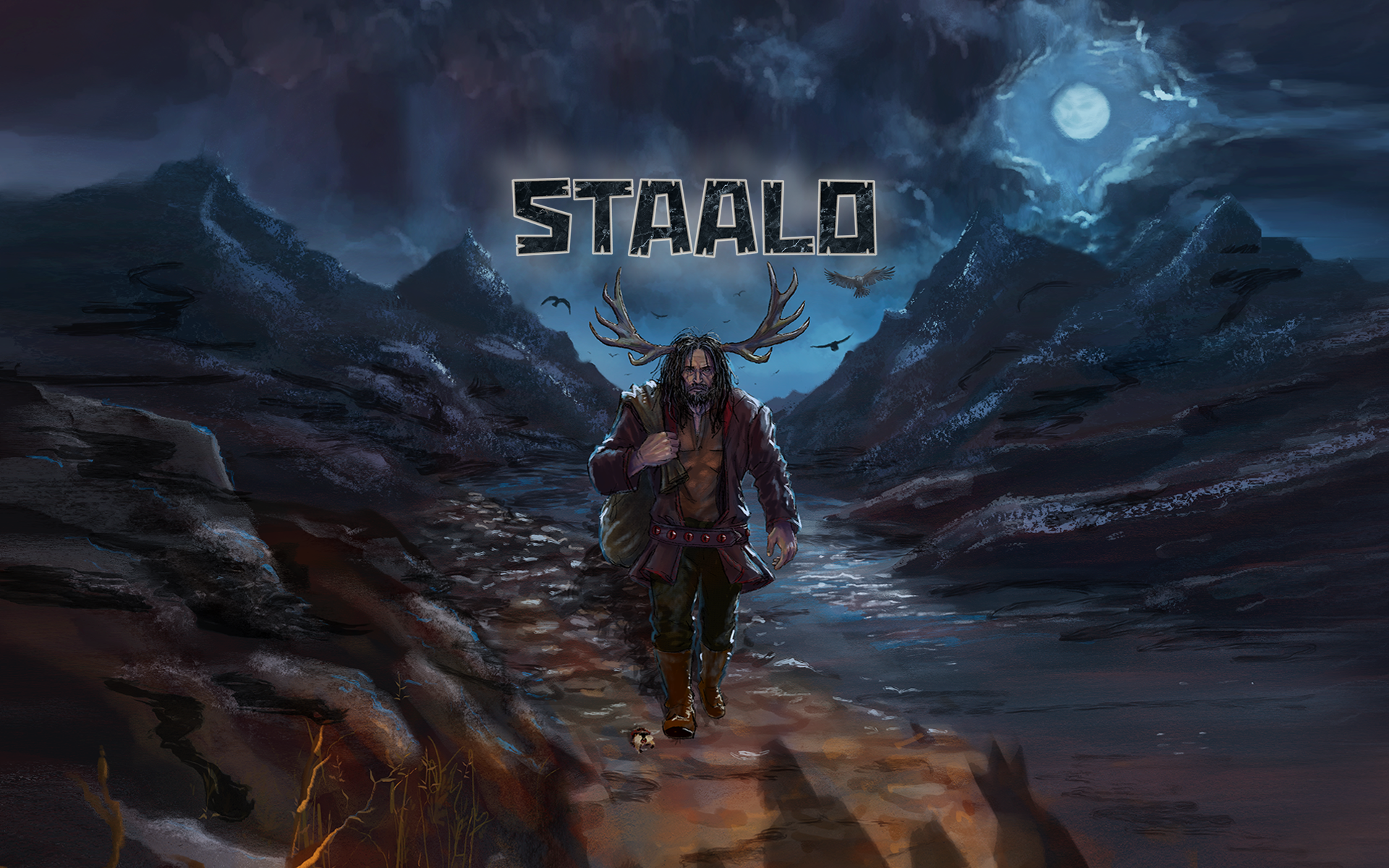
Before humans, the great land of Sápmi was inhabited by the stállu: mythical, powerful and malevolent giants. The stállu is one of the central figures in Sámi mythology, and an extensive body of tales grew up around him. Treasures were stolen from the stállu, and he was used to frighten children. Now anyone can come face to face with Stállu in a new board game.
Board games on Sámi themes or in Sámi languages have been rare on the market. For the most part they have been translated games, or simple educational games aimed mainly at children. Stállu (Staalo in Finnish) is a new fantasy board game for teens and adults, arriving to fill that gap.
“Many years ago, a group of friends and I were heading to a cabin, with an evening of board games planned,” says the game’s lead designer, Tommi Jama. “But instead of bringing one of my own games, I made one myself: a fantasy board game that plays quickly.”
But the idea of standard fantasy with dragons and elves felt a bit worn out. “So I decided to make a game distinctly based on Sámi mythology: the cruel Stállu against the inhabitants of a Lapland village. I populated the map not only with bears and wolves, but also with ghosts and gufihtar. I printed out and taped together a sort of prototype. The game turned out a little dark, suitable for a trip in the middle of the wilderness in the autumn darkness.”
The rough creation was liked surprisingly well. Someone uttered the dangerous words during the evening: “This might actually have commercial potential.”
However, after the trip, Stállu ended up gathering dust in a dresser drawer for years. At some point the game was dug out and played with another group. Again the reception was positive. “My friend Jaakko Asikainen happened to be a games industry professional, and he said, ‘This could be a cool project. Let’s make this into a real board game!’ and so we got the project going.”
From paper to cardboard
The game includes dozens of different cards, which needed illustrations. It was unthinkable to make a marketable game using only publicly available images, so Asikainen began looking for suitable visual artists. Erja Taskinen was found conveniently in the same town, and Laila Labba was recruited from Karasjok. Jama was involved in the Oulu Sámi Association, and the City of Oulu had specifically asked the association for Sámi art projects for its Capital of Culture year. “I thought this was just the thing, if anything.” The team applied for a grant to take part in the Oulu 2026 programme, and it hit the mark. That grant, along with a couple of others, made it possible to commission art and prototypes.
Getting the game ready for release required all sorts of twists and turns. “I’ll tell more at the launch event, but I’ll say this much: my idea of how ‘easy’ making a board game would be turned out to be a bit naive,” Jama says.
How the game plays
One player plays Stállu, and the others play villagers who cooperate to try to defeat him. At its foundation Stállu is a simple game: you move, explore, and fight when necessary. Many of the cards, however, can affect the game in several ways. In playtesting, more than once, players came up with uses for features that the designers hadn’t thought of. The players haven’t been steered too much along predetermined “rails”; instead the game encourages inventiveness. Each character has their own personality, their own strengths, and their own interactions with certain cards, which may hint at who the characters are. If they wish, the Stállu player can influence the difficulty level through their playing style. In a friendly game, Stállu can take it easy and give the villagers room, but a competitive Stállu can also be nasty and aggressive.
“Languages survive only if they are used.”
Not just “Lapp-sploitation”
At no point did the team think that Lapland exoticism would be included merely as a selling point. Three quarters of the development team are Sámi, and the game is aimed also, and especially, at Sámi people. The project has attracted a great deal of interest among the Sámi. The game was originally written in Finnish, but it has also been translated into North Sámi. It is important that even small language groups get popular culture published in their own language, because languages survive only if they are used. In the future the game may be translated into other Sámi languages as well.