Climate Clock
Series of public artworks in Oulu featuring world-renowned artists.
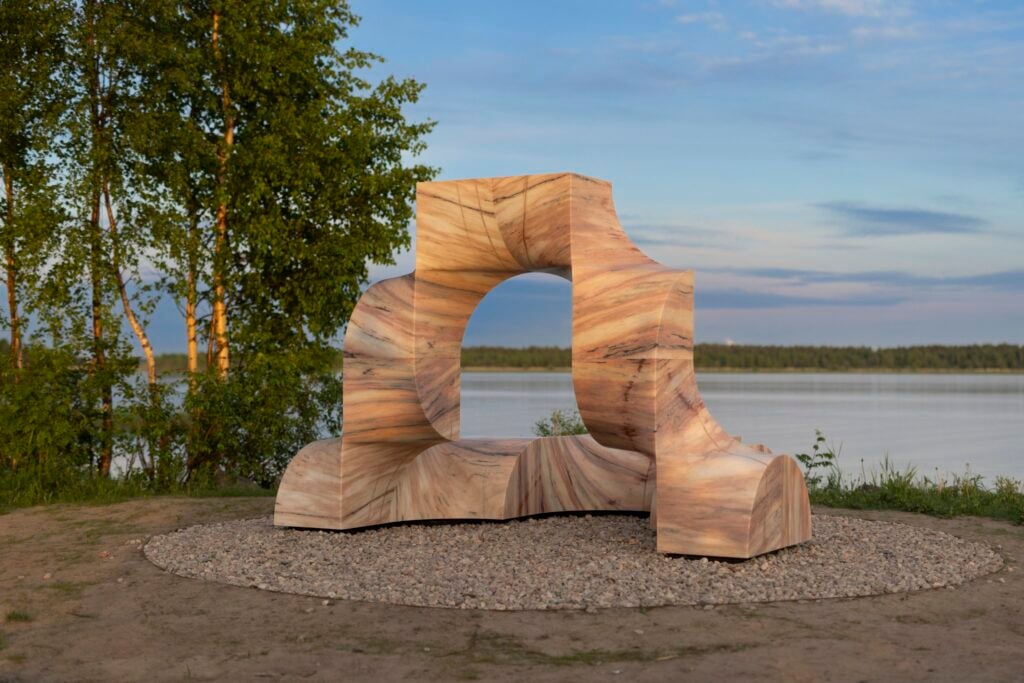
Artworks created by world leading Finnish and international artists form a permanent landmark in Oulu. Each unique location offers a moment of reflection and hope for the future.
What is it about?
“The Climate Clock is ticking, the snow is melting, and we are learning anew what our forebears knew – that time is not ours to command; that nature keeps its own time”. Alice Sharp, Climate Clock curator.
In Climate Clock art intertwines with science and nature to inspire environmental awareness and reconnect us with nature’s time. Oulu is a sub-Arctic region affected by Arctic warming, which is occurring four times faster than the rest of the world. The artworks invite us to consider how our seasons and sense of time are changing in an ever-faster digital world and strengthen our connection to nature.
Climate Clock is an art trail across Oulu and a major programme created by Oulu2026 European Capital of Culture, curated by Alice Sharp, Artistic Director of Invisible Dust and programmed by international producer Claudia Woolgar with technical advisor Sam Collins. Alice Sharp brought each artist together with a scientist to bring new thinking about climate change and local nature. Issues such as forests, rivers and seashores. How a Stone Age Centre sits alongside urban centres. All aimed to inspire environmental awareness Alongside these permanent artworks is ‘The Most Valuable Clock in the World,’ an artwork co-created for the project with local communities.
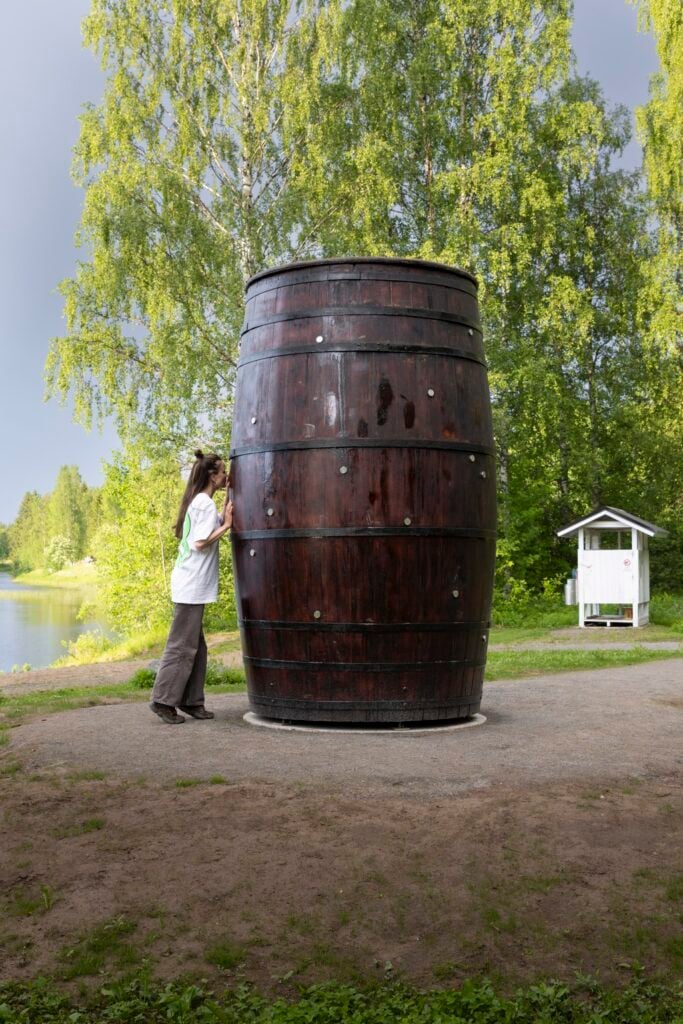
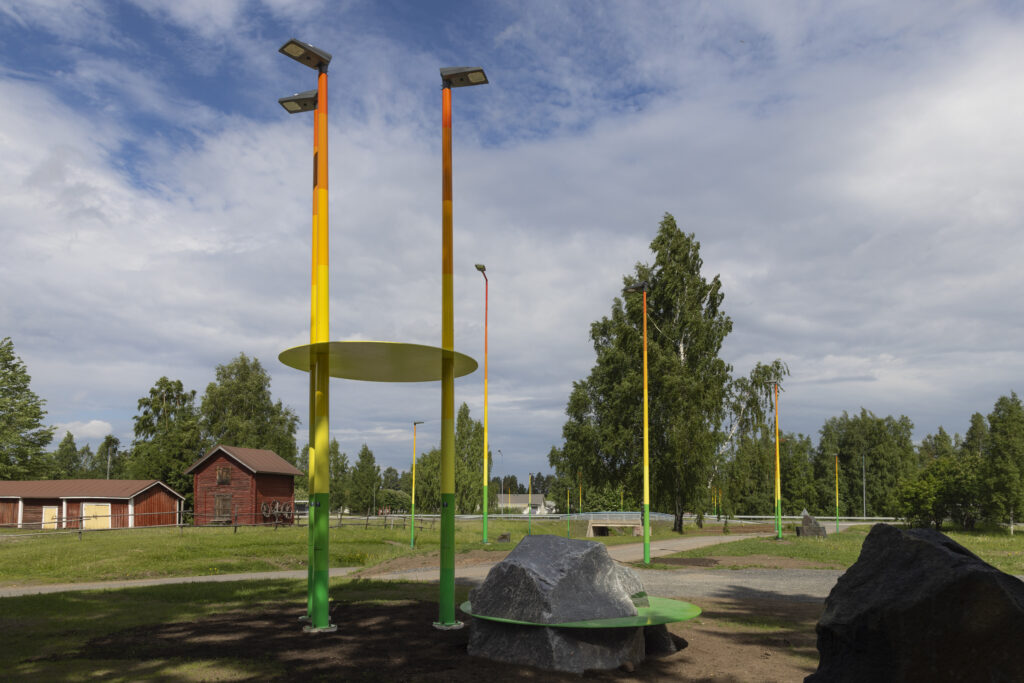
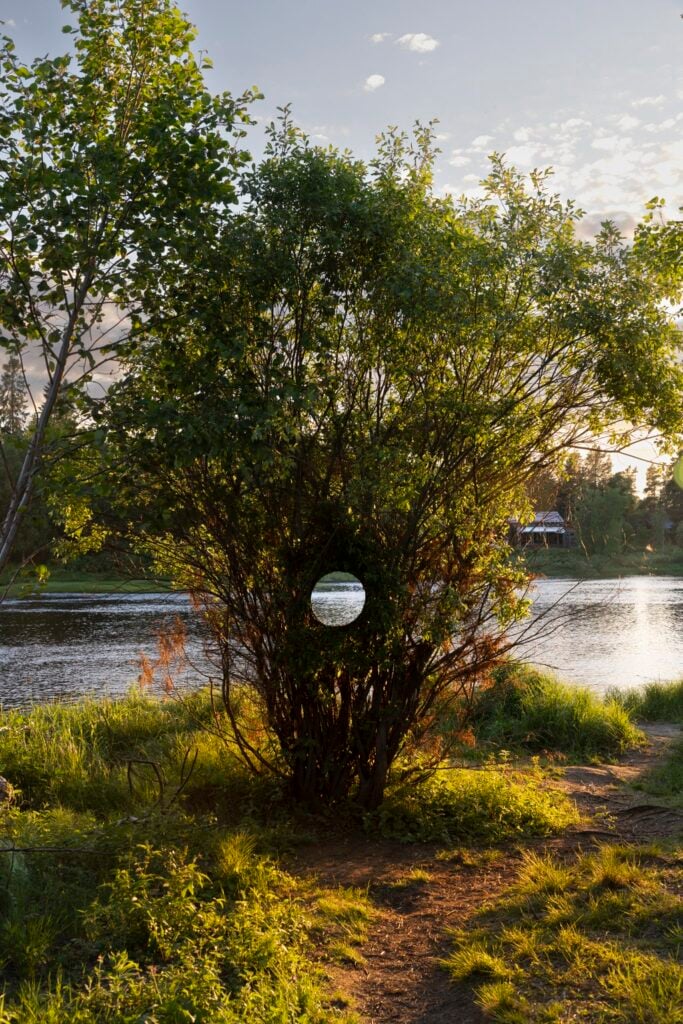
The Artworks
Events
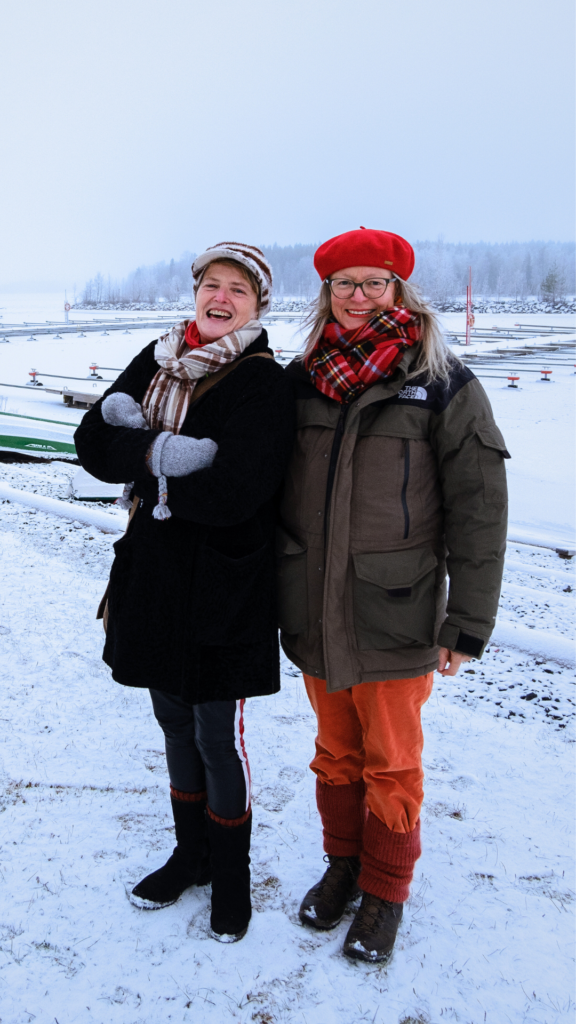
Climate Clock is curated and produced by international top experts
Alice Sharp
Curator of Climate Clock and Artistic Director Invisible Dust
Alice Sharp, Artistic Director and founder of Invisible Dust UK in 2009, is a curator, writer and speaker making the invisible visible, creating new international poetic thinking and raising hidden voices on the ever pressing issues of climate futures. Imaginative thinkers she has collaborated with include Margaret Atwood, Ben Okri, China Mieville, Elizabeth Price, Shezad Dawood, Jeremy Deller and Raqs Media Collective alongside leading international scientists such as Professor Alex Rogers, UK and Dr Éliane Ubalijoro, Canada. Alongside Climate Clock, Alice is currently curating ‘The Ocean’s Edge’ inspired by mother of the environmental movement Rachel Carson with Licida Vidal, Leticia Ramos and Alberta Whittle in partnership with Pivo Brazil and TBA21-Academy Spain as part of the British Council and British Council Brazil and Instituto Guimarães Rosa UK/Brazil Season 2025/26. Partners include Glasgow International, Brazil Embassy Edinburgh, Baltic, Cove Park, Sao Paulo Ocean Institute and Scottish Association for Marine Sciences
Sharp was selected for the British Council Malaysia Human Nature Delegation 2024; presentations include recent WHO panel with Mark Ruffalo, British Council ‘Circular Cultures’ Athens, Columbia University, New York; Davos 2020; the UN Development Programme Turkey; and hosting the International Association of Corporate Art Collections symposium in Madrid.
@AliceWSharp
@invisible_dust
www.invisibledust.com
Claudia Woolgar
International programme and producer Climate Clock
Claudia Woolgar is an experienced international programmer, producer, advisor and creative/strategic consultant with extensive international experience, most especially in the UK, The Netherlands, Ireland, Finland and Eastern Europe. She is co-founder of Brave New World Producties (BNWP) and is the artistic heart behind the organisation. Since establishing BNWP in 2019, the organisation has produced Fuerza Bruta and CARGO Shanghai-Friesland, and was the Lead Producing Partner in a 16 country Creative Europe project, ULYSSES European Odyssey, for which BNWP co-produced two projects, metamorphoSEA as part of Eleusis European Capital of Culture 2023, and Gender Matters, with Turkish film company, Yalan Dünya Films.
In her capacity as creative producer and consultant, she has worked with clients such as Oerol Festival, the Municipality of Leeuwarden and Provincial Government of Friesland and Leeuwarden 2028 (the legacy organisation after the European Capital of Culture year in 2018). In 2019 she began working with Oulu2026 European Capital of Culture, initially in an advisory capacity in the Bid Book phase, and thereafter as the producer of the key international flagship projects she programmed, Climate Clock and Underground Clash. She also came up with the vision for Leeuwarden’s UNESCO City of Literature bid, and co-wrote the winning application. She is a panel member for Creative Ireland’s Creative Climate Action fund and the Arts Council of Ireland and is on the European Capitals of Culture Experts Panel.
She worked from 2015 – 2018 as co-artistic leader and a member of the programming team for Leeuwarden-Fryslân 2018 European Capital of Culture during which she was responsible in the early stages for the public artwork project, 11Fountains. On her advice, once the artistic designs were confirmed, the project moved to the Provincial Government who were responsible for infrastructure and placement of the fountains.
Her previous positions include: international programmer for Limerick National City of Culture 2014, Artistic Director and CEO of The Source, a new arts centre in Ireland, and Director of Kilkenny Arts Festival, an international multi-arts festival. Before that Woolgar produced and toured the work of directors such as Rimas Tuminas (Lithuania), Silviu Purcarete (Romania), Lev Dodin (Russia) and Declan Donnellan (UK), and from 1994 – 1997 ran a British-Romanian theatre exchange programme, Noroc, which included managing and programming the first British theatre festival in Bucharest. She has worked in the Caucasus, training young arts managers, and is an arts journalist and theatre critic, with work published in The Spectator, The Guardian, The Times Magazine, The Economist, The European, Plays International Europe, The Stage, The Washington Times Magazine, Theatre Ireland, and The Irish Times, among others. She also reviewed for BBC Radio Ulster, Kaleidoscope, and Radio 2.
Sam Collins
Technical Consultant Climate Clock
Sam Collins is a designer, production manager and technical director who specialises in the creation and delivery of new and challenging artworks. He has worked for over 20 years on a diverse range of projects across contemporary art, exhibitions, performance and theatre, with an equally diverse range of artists, curators, directors, designers and choreographers.
Sam has a long association with Artangel, where he has been Head of Production since 2015, and with Manchester International Festival and Factory International where he has overseen numerous large scale productions, including most recently Marina Abramovic’s Balkan Erotic Epic and Yayoi Kusama’s You Me and the Balloons.
Read Alice’s curatorial statement here
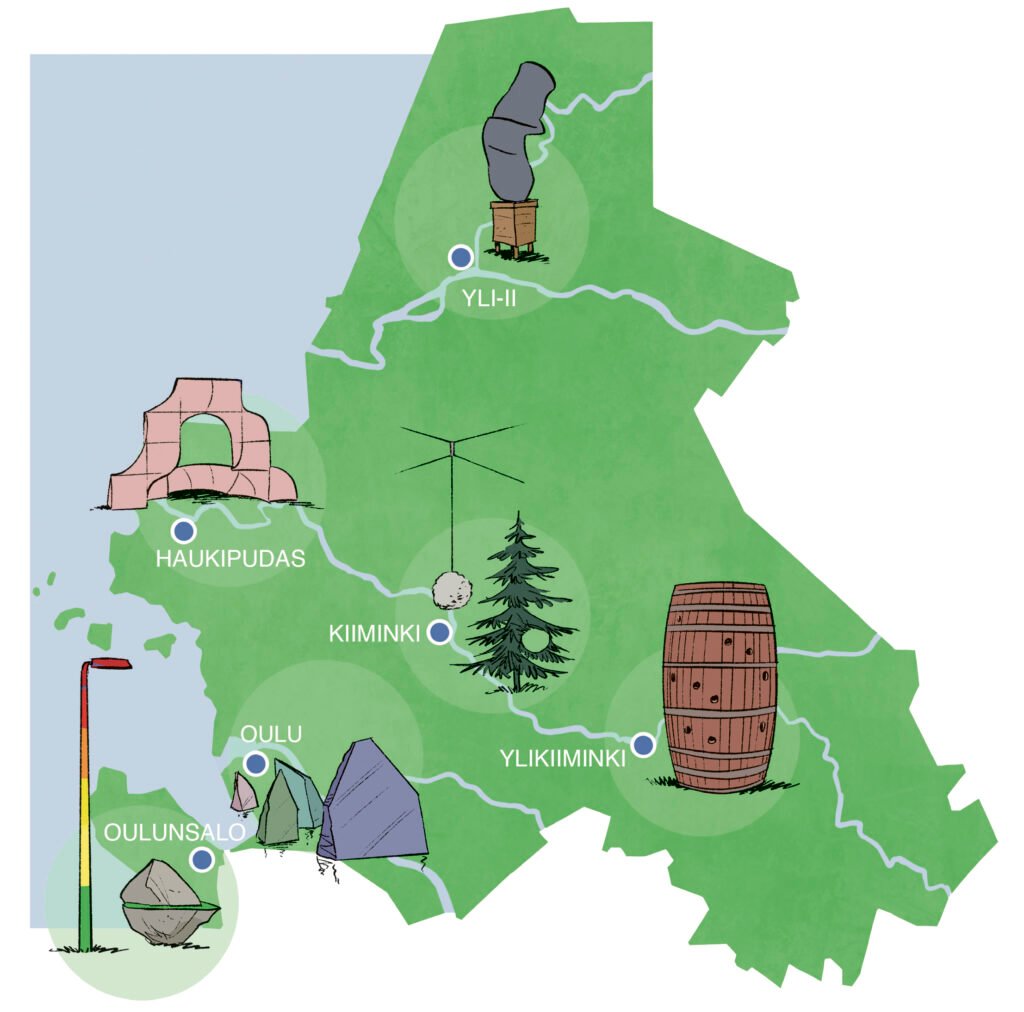
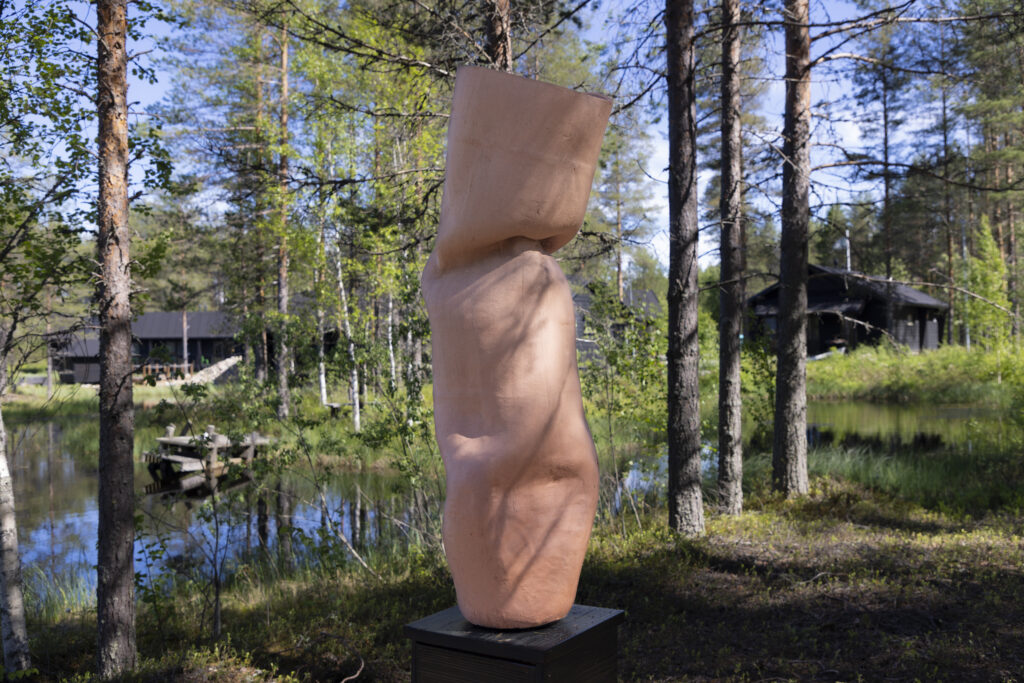
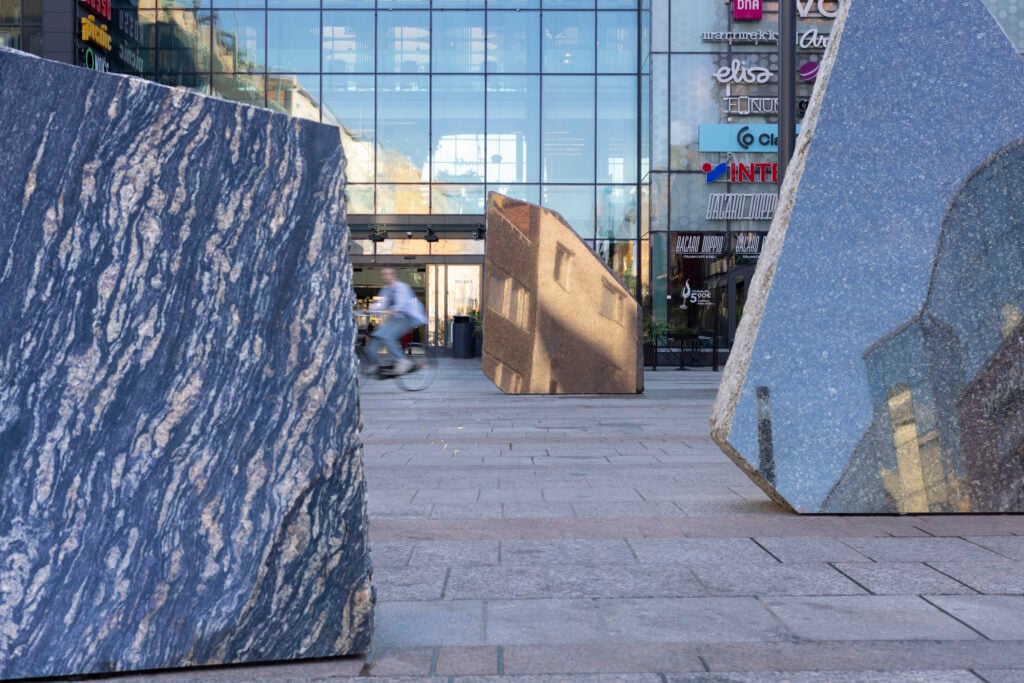
Climate Clock artworks created by world leading Finnish and international artists will be based in Oulu City and Yli-Ii, Haukipudas, Ylikiiminki, Oulunsalo and Kiiminki and will form a permanent sculpture route around the Oulu region, advised by scientists and giving a moment of pause at each location. Alongside this The Most Valuable Clock in the World, a new artwork co-created with the respective local communities by renowned artists Tellervo Kalleinen & Oliver Kochta-Kalleinen.
The climate clock is ticking, the snow is melting, and we are learning anew what our forebears knew – that time is not ours to command; that Nature keeps its own time. For Climate Clock artists work with scientists and reconnect us to Nature’s time. Can they help us escape the tyranny of our fast modern day time and capture slower time through ideas rooted in the natural world?
Oulu is one of the world’s northernmost cities and part of nature’s winter mirror to climate change, just below the Arctic Circle and warming at four times the rest of the earth. Climate Clock explores how this faster heating is changing the weather and natural systems. These, although part of everyday life and easily taken for granted in Oulu, are extraordinary to visitors. Including the brilliant whiteness of winter with the sun’s low glowing light across the horizon; dark rivers in the undulating snow; ice roads crossing the solid frozen sea and vibrant short hot summers with verdant green; alongside local customs such as fishing on the sea ice dating back to prehistory.
Human rhythms, like the seasons and wildlife, have always responded to sunlight. Being towards the top of the earth’s sphere, on the shortest day of the winter solstice, Oulu receives an hour of sunlight, whilst in the mid-summer it is the reverse. In the past our slower lives enabled us to have moments where we forgot time before the technological clocks of mobiles and laptops. The end of a working day was just that people daydreamed on the way home from work. This was part of the concept of time that nineteenth century Finnish poet Eino Leino wrote about in his famous poem Nocturne:
‘Time has ceased and the weathervane is sleeping; Stretches road at twilight end of day, Bound for home unknown, I take its way’. (eng. transl. Rupert Moreton)
The Arctic was the earth’s complete snow cap and reflected the heat back into space, but now this is changing and the ice is melting, the dark waters are emerging, changing the earth’s systems and with it, our seasons, nature and pace.
Now our world is getting quicker, our fingers stretch out to our phones, and we demand instant access to a vast array of fast moving and intricate decisions; creating lifestyles which are at odds with natural rhythms and cadences. Nature takes time and does different things at different times; a tree grows for a hundred years, a drop in one ocean reaches another in a hundred thousand years. We tend to think of time as a given; like energy or mass that you can measure. And we do measure it. But time is an abstraction, we have created it for our needs and now with climate change we are up against it.
Climate Clock reflects on how we have forced our notion of time onto nature, changing it and us. How might we reconsider our fast changing lifestyles and take time, and in doing so understand the preciousness and necessity of living interconnected with the earth’s own natural clock?
Making it happen