Ranti Bam
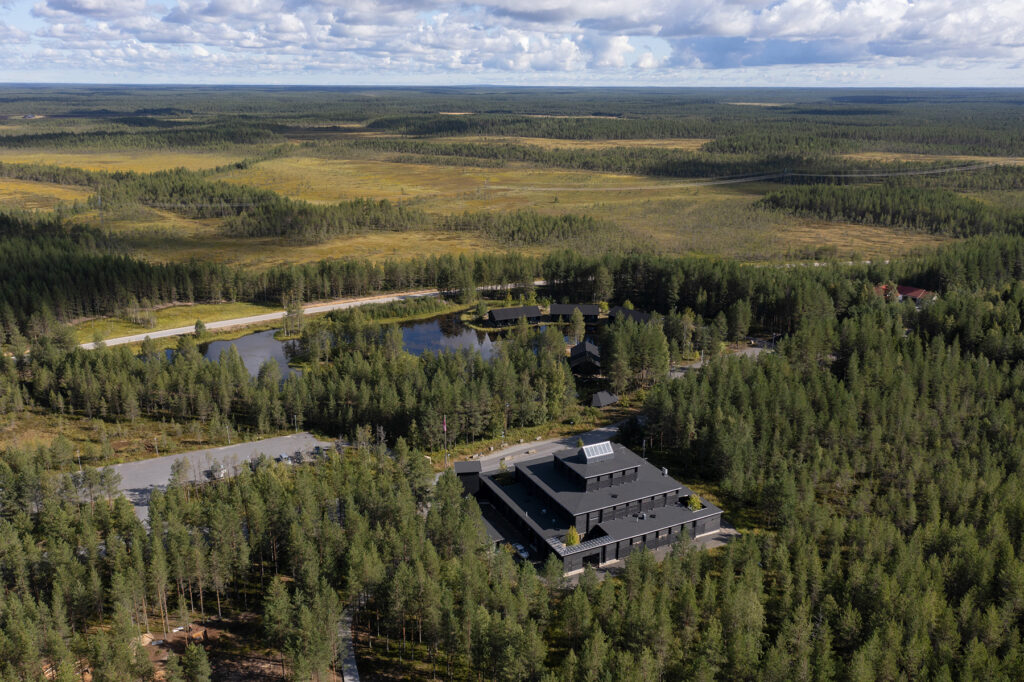
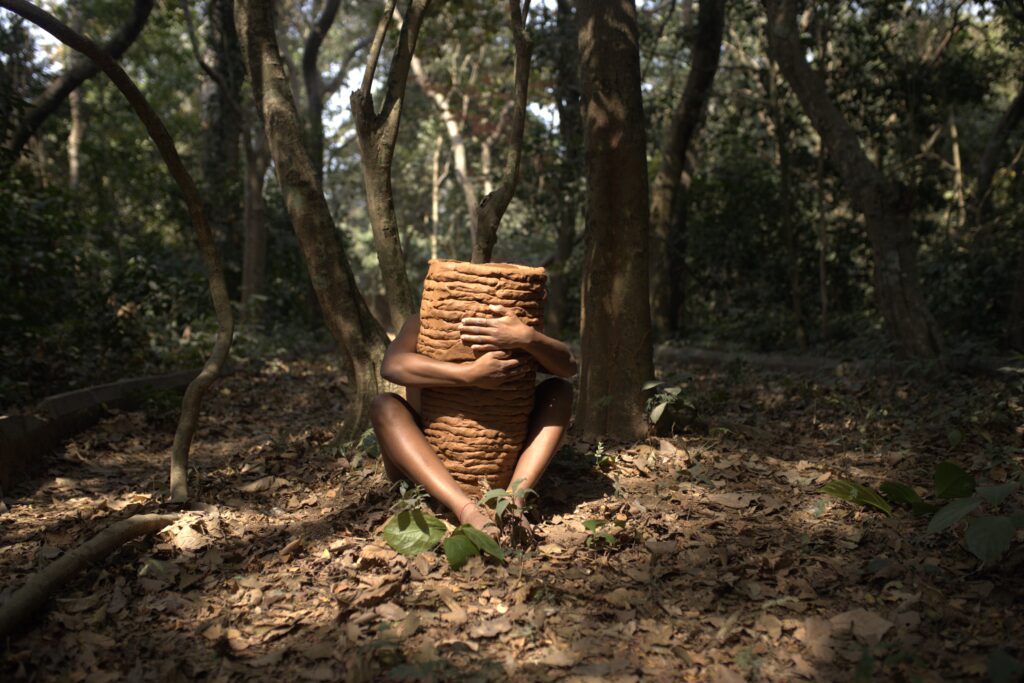
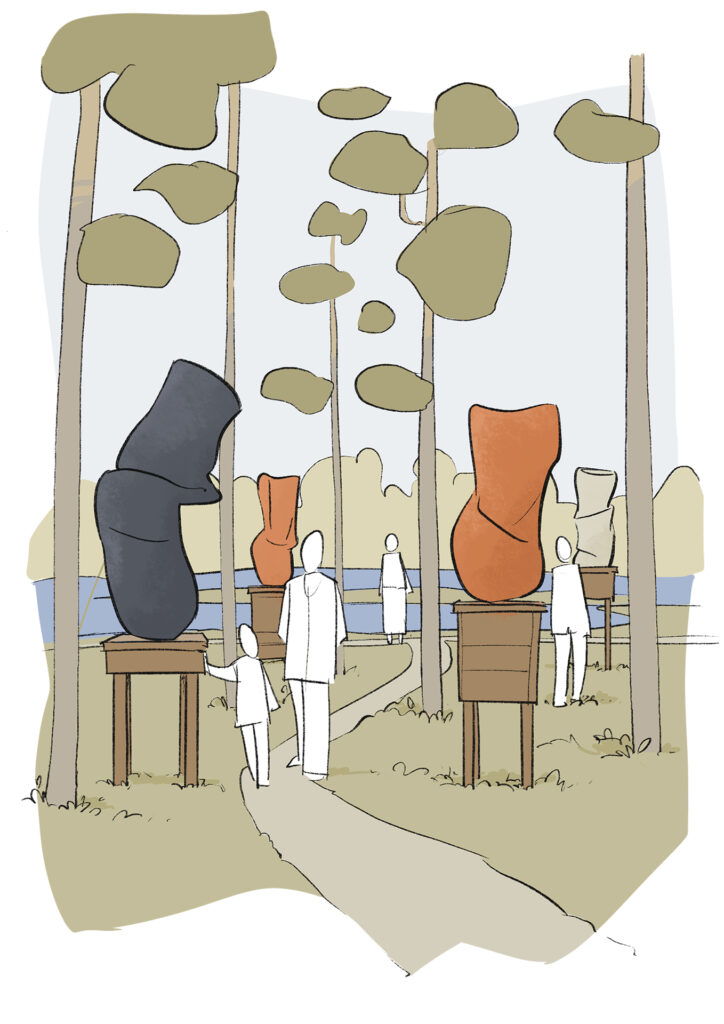
Ranti Bam works primarily with clay, a material she understands as a living entity —responsive, impressionable, and shaped by time. Her work is titled ‘Ilé-Ìlá: A Place That Remembers’, which is fitting for its setting of Kierikki Stone Age Centre. In this northern terrain, clay becomes shared ground; a reminder that humans and landscapes are materially entangled, and that how we hold the Earth shapes what remains.
Artwork: Ilé-Ìlá
Location: Kierikki Science Centre, Yli-Ii
Address: Pahkalantie 447, 91200 Oulu
Bam forms the shapes of her clay vessels through the pressure of her own body and her sculptures retain the marks of making, becoming intimate hearths and quiet sites of reflection, where the everyday and the sacred meet. Drawing on her Yoruba heritage, the works articulate a dialogue between material and spirit, endurance and fragility.
Encountering Stone Age ceramic shards inside the Museum displays deepened Bam’s inquiry into the traces we leave behind. The fragments, marked by hands long gone, revealed clay as archive and witness, a substance that carries memory across generations. Kierikki embodies deep time; its archeologists described how they found Stone Age people’s finger prints in the clay. Affirming her understanding of ceramics as a vessel for both presence and absence.
Materials used in the artwork are Black Stoneware clay & Douglas Fir wood.
Science advisor
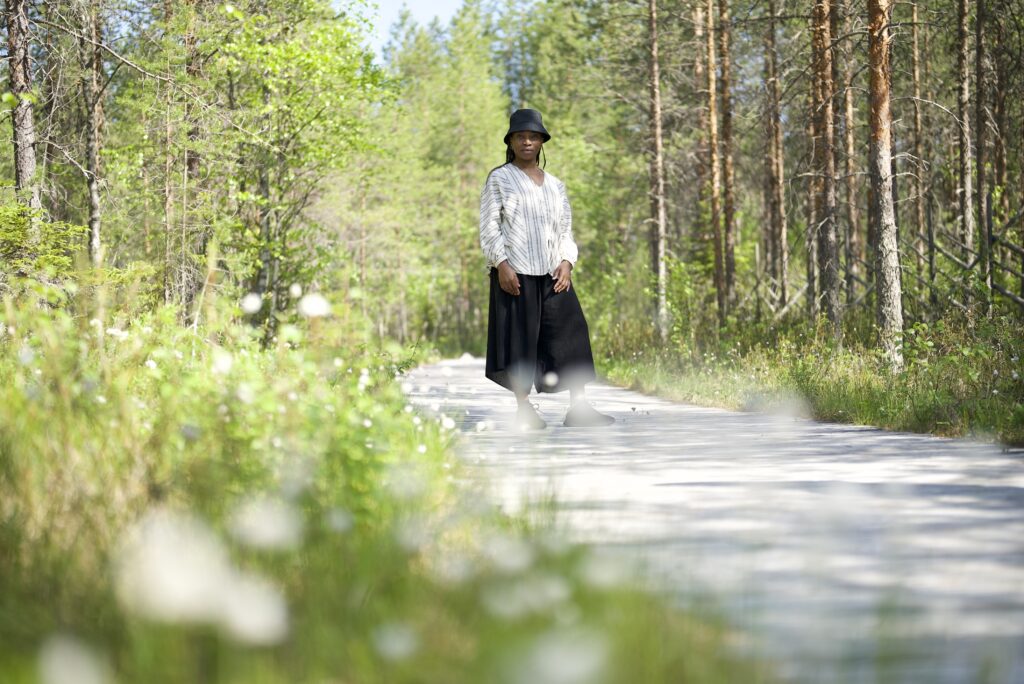
Jan Hjort, Professor of Physical Geography, University of Oulu.
Jan Hjort is a physical geographer interested in Arctic, Sub-Arctic and alpine environments. Hjort looks at how geology (rocks, landforms, and landscapes) interact with nature, natural processes and biodiversity over time; this area of geography is called geodiversity.
Art and science
Bam was interested in the Kierikki Stone Age Centre setting next to the River Iijoki so she and Jan Hjort discussed the way that the landscape has changed over millions of years and the fact that the land is gradually rising away from the sea. Hjort showed Bam the Light Detection and Ranging (LiDAR) maps and they discussed how the landscape and nature is changing over time and the effects of climate change. The new thinking from their relationship was the analogy of clay to the landscape and its ancient past.
Bam’s sculptures embody the interrelationship of humans and nature both physical and spiritual. Hjort’s ideas illuminate the Gaia theory by James Lovelock that everything in our natural systems is related to everything else. So by understanding climate change as well as changes to our wildlife, his science shows that we need to know more about the actual rocks and topography under our feet and how these changes in our deep past will affect our future with warming affecting nature, air and water cycles, seasons and weather.
Artist bio
Bam (b.1982 UK/Nigeria, lives in Paris) has exhibited internationally including 61st International Art Exhibition of La Biennale di Venezia (2026), South London Gallery (2026), James Cohan, New York (2024), Museum of Applied Arts, Austria, (2023), and Liverpool Biennial, (2023). Bam’s work is represented in the public collections of the Brooklyn Museum, New York; Chazen Museum of Arts, Wisconsin; Contemporary Art Society, the de Young Museum, San Francisco, CA; High Museum, Atlanta; Museum of Applied Arts, Austria; Princeton University Art Museum; RISD Museum, Rhode Island; the Studio Museum in Harlem, New York and Victoria & Albert Museum.