Kruunulehto’s forest and historic courtyard offered a glimpse over the weekend of what cultural climate change can look like in practice. At the festival generations, traditions, the present day and different forms of art came together
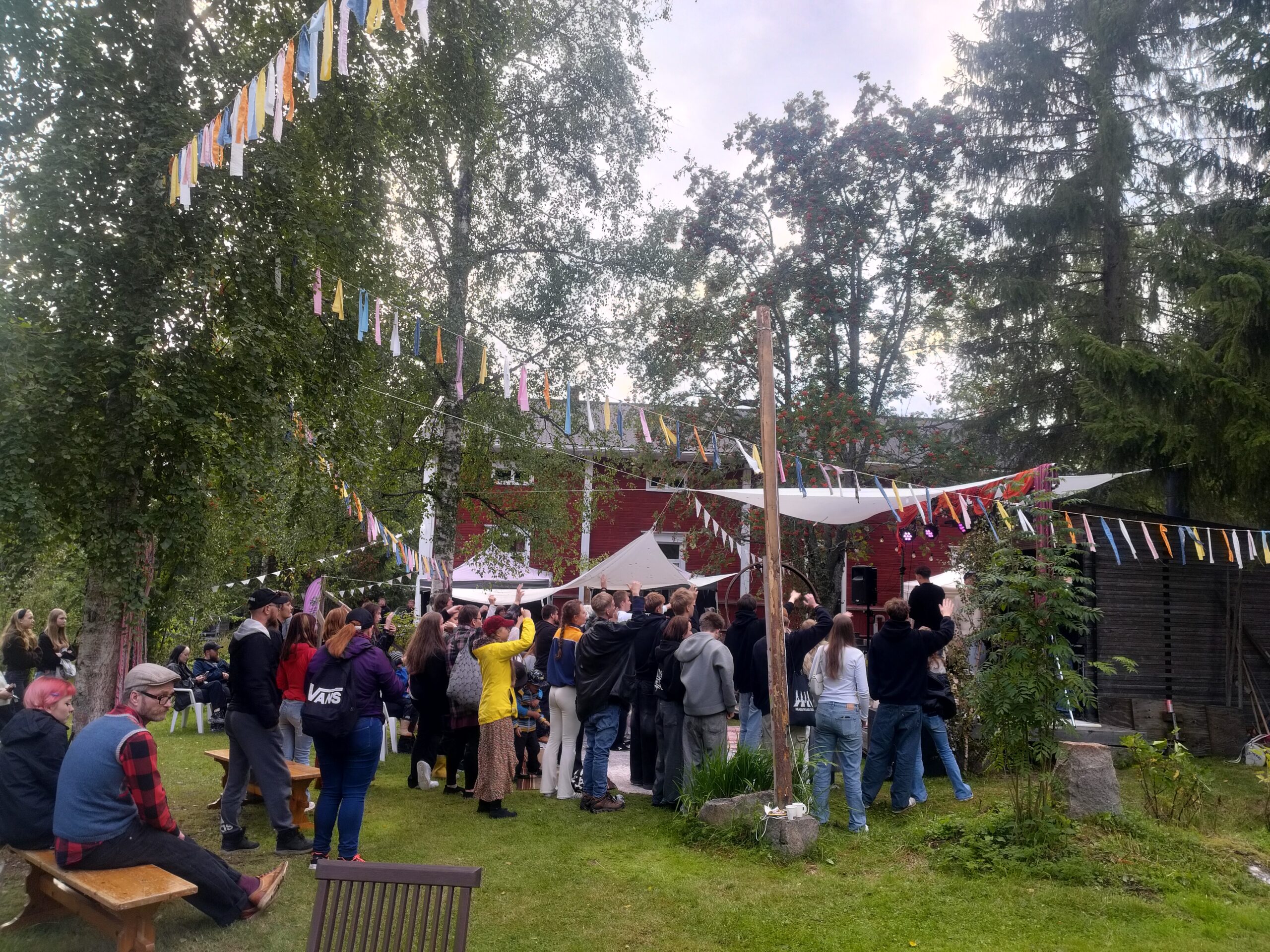
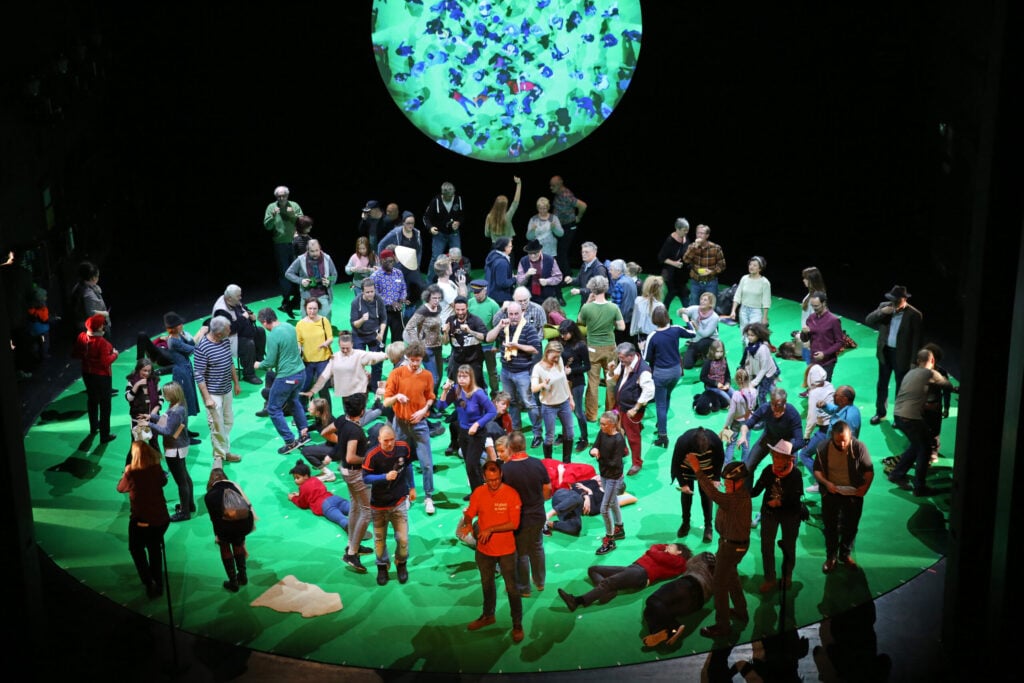
During a single day at Kruunulehto, Ylivieska, visitors could stumble upon a short film screening in the cellar of the old house, an improvised poetry and dance performance, puppet and improvisational theatre, or workshops focusing on junk art and clay. In the forest, visitors could pause for a forest sound bath, take part in a free movement workshop, or set off on an adventure with Memmu the Troll, a favourite among the children. Luovuutta lehdossa – a festival of art for everyone – was held on Saturday, August 8, in Vähäkangas, Ylivieska.
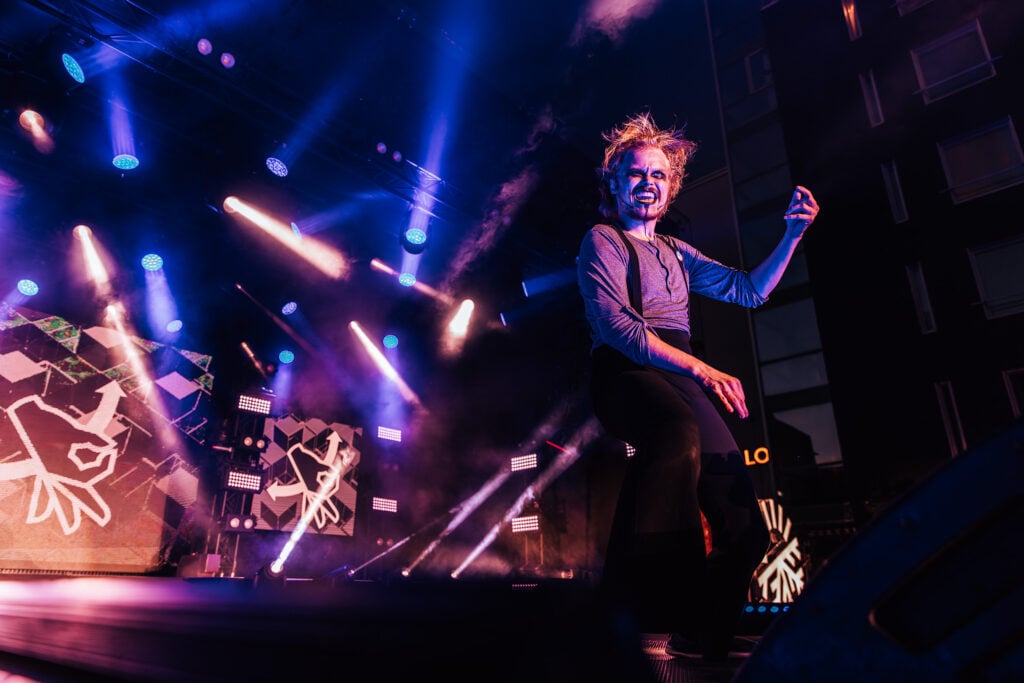
Live music was performed by several artists, while the programme also included folk dancing, a celebration of traditional Finnish costumes, and communal singing. Artworks were available for purchase, and new pieces were created using natural and recycled materials. Along the art trail, visitors could admire environmental artworks, chainsaw sculptures and installations created during the Kruunulehto artist residency.
But perhaps the scene that best captured the spirit of the day was one that could not have happened at just any event: grandmothers listened to a rap performance and young people sang traditional songs together with them.
That was precisely what the organisers had hoped for.
“We wanted to bring different generations, traditions and the present day together, as well as different forms and genres of art. The way people embraced the event and enjoyed spending a long day together exceeded our expectations,” says Anni Kallio, producer of the Alavieska Art Association.
A festival created by people – not planned in advance
Luovuutta lehdossa was exceptional in the way it came into being. The organisers did not decide beforehand what the festival would look like. Instead, ordinary people, amateours and artists were invited to contribute their own programme through an open call.
The event grew organically from there. Its programme gradually took shape from people’s own ideas, skills and enthusiasm.
The Kruunulehto courtyard and forest were also prepared through volunteer work. A huge number of volunteer hours went into creating the event, with people of different ages working side by side. According to Kallio, the volunteers ranged in age from 30 to 80.
“There was something revolutionary about the way this event came into being. No one decided what would happen. Instead, people brought their own skills and enthusiasm, and that grew into something bigger,” Kallio says.
The event’s other producer, artistic director and owner of Kruunulehto, Jonna Taikatie, sees this as the very heart of the festival.
“Creativity doesn’t have to belong only to artists. We wanted to create a space where people could experiment, play and discover something new in their own creativity. When people of different ages come together in a deeply rooted environment, completely new encounters emerge – both within ourselves and with one another.”
Art from the cellar to the forest – and food bringing generations to the same table
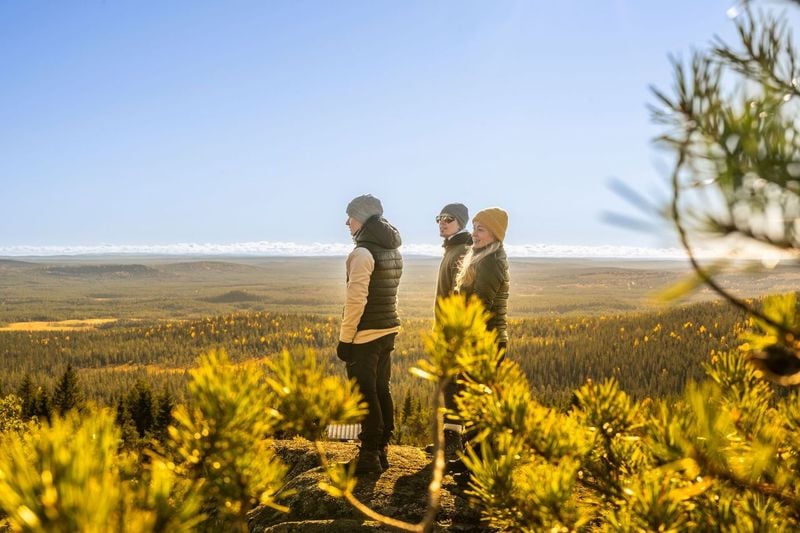
Kruunulehto’s more than 200-year-old house and surrounding forest gave the festival a distinctive atmosphere. Art was not confined to a single hall; it could be found in unexpected places – in the cellar, the courtyard, the forest and in the things people created themselves.
Food culture was also an important part of the day. Inside the old house, the Juurilla pop-up café-restaurant served nettle soup, rye bread and sourdough bread baked in the house’s traditional wood-fired oven, wild-herb drinks and ternimaitopannukakku, a traditional Finnish pancake made with colostrum. Clean ingredients from nearby farms, wild herbs and Finnish food traditions brought the flavours of the past into a contemporary festival.
The whole experience resonated strongly with the idea of cultural climate change at the heart of Oulu2026: bringing culture closer to people, making participation accessible, and creating encounters between different people, perspectives and forms of art.
At Kruunulehto, however, cultural climate change did not feel like a theme or an abstract goal.
It could be seen and felt in practice.
People stopped, participated, listened to one another, tried something new and enjoyed spending a long day together. The old and the new did not compete with one another – they found each other.
Luovuutta lehdossa showed that cultural climate change can begin with something as simple as giving people a space to bring their own creativity to the shared table – and allowing encounters to happen.