On February 15, 2026, the traditional Laskiainen (Shrovetide) festivities at the Wanha Woima Cultural Heritage Centre in Oulainen transformed into a joint Oulu2026 opening event for both towns.
Kalevala on the Kantele and Snow Horses
Oulu and the surrounding North Ostrobothnia region hold the title of European Capital of Culture 2026. The Oulu2026 programme reaches far beyond the city, showcasing the region’s diverse cultural landscape and strong local identities.
Among the 14 official Oulu2026 festivals are two events in the southern part of North Ostrobothnia – in Oulainen and Haapavesi – that illustrate how deep-rooted traditions and contemporary art can meet.
In Oulainen, Wanhan Woiman Päivät (“Old Engine Days”) celebrates vintage machinery, craftsmanship, and rural heritage, drawing some 20,000 visitors annually from Finland and abroad. Meanwhile, the Haapavesi Folk Music Festival continues the town’s renowned music tradition, presenting world music, folk, jazz, and pop in a warm, community-focused atmosphere.
A Joint Oulu2026 Opening Celebration
On February 15, 2026, the traditional Laskiainen (Shrovetide) festivities at the Wanhan Woiman heritage centre in Oulainen transformed into a joint Oulu2026 opening event for both towns.
After weeks of intense cold, the day turned bright and crisp (–10 to –14°C). Visitors gathered for a free outdoor celebrations blending ancient winter customs, living heritage, and performances by award-winning artists. Alongside sledding, kick-sled races, and traditional foods, the event offered participatory art, music, and snow-sculpture workshops that ran for three hours in the afternoon.
Kalevala on the Kantele and Accordion
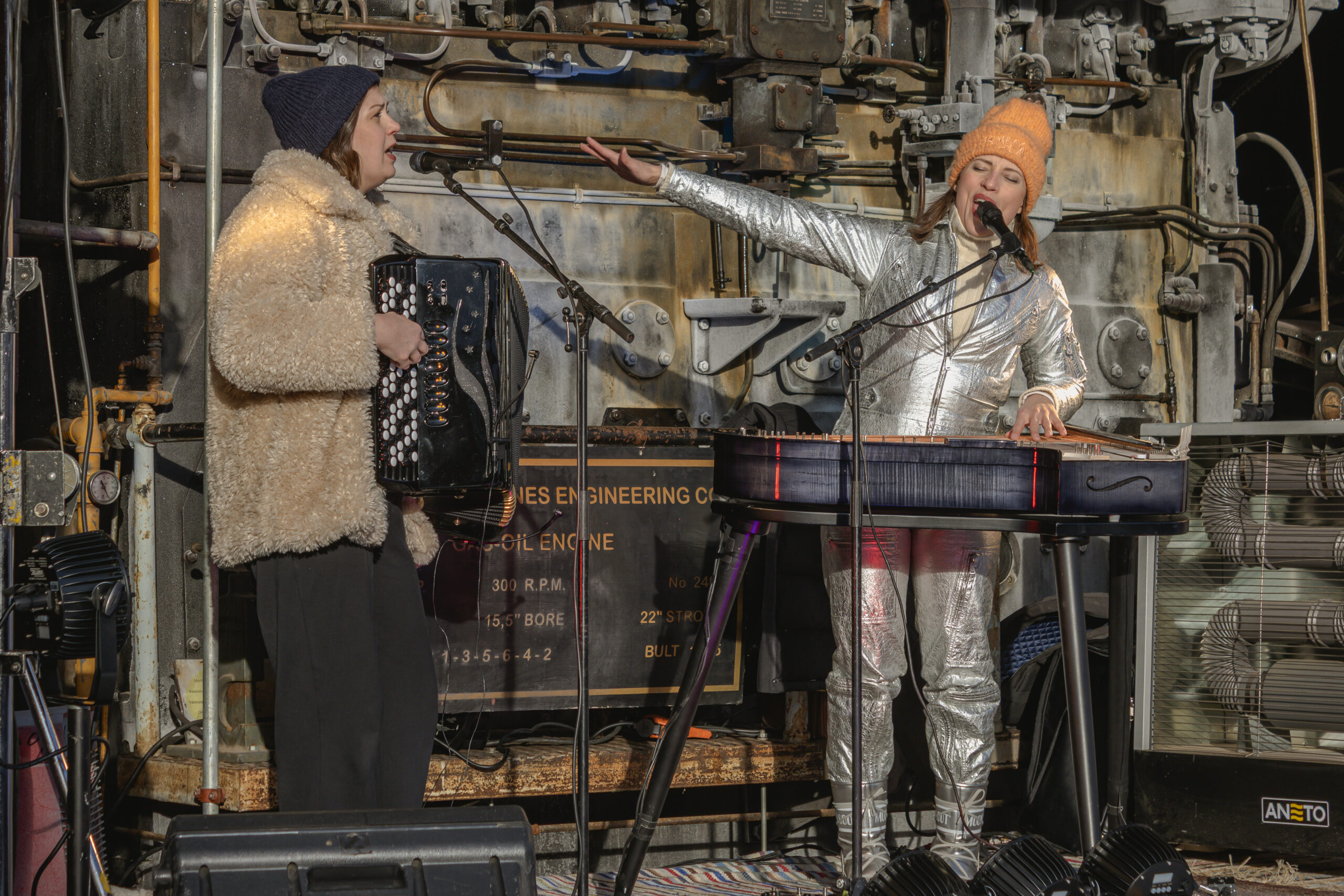
A highlight of the day was the debut joint performance by two internationally acclaimed artists with roots in the region: kantele artist Ida Elina and accordionist Teija Niku.
Ida Elina’s Kalevala-inspired short film ”Under the Northern Skies” (Pohjolan Kaiut) has captured global attention, and Niku, the artistic director of the Haapavesi Folk Music Festival, celebrated as her new album ”Tovi” rose to No. 7 on the World Music Charts Europe.
Performing together in front of a historic generator traditionally operated during Wanhan Woimat Päivät, their music symbolically connected Finland’s mechanical heritage, Kalevala poetry, and contemporary folk sound. The kantele and accordion, long tied to Finnish dance traditions, echoed across the snowy landscape.
Snow and Ice Art: “Are There Still Snow Horses?”
Visitors were also invited to join a collaborative snow and ice art workshop, “Are There Still Snow Horses?”, led by three distinguished artists. The title subtly echoes the beloved Finnish song, “Are There Still Wild Horses?”, transforming its spirit into a wintry reflection on imagination, memory, and the fleeting shapes of snow.
Ukrainian sculptor and architect Bogdan Kutsevych, renowned for his snow, sand, and ice art, collaborated with Anna Koivukangas of Oulainen, whose team won first prize (February 6, 2026) at the Sapporo Snow Festival’s International Snow Contest with their work ”Momentary Stillness”. Kutsevych, together with visual and performance artist Jonas Vuorma, participated as a guest of the Sykli Residency Programme and the Wanhan Woima Oulu2026 celebrations.
Children Carrying Tradition Forward
Children played a central role throughout the event. Pupils from Jauhinkangas School performed ”Long Flax Stalks!” (Pitkiä Pellavia!), written and directed by Anna-Mari Laulumaa, exploring Laskiainen’s flax-growing traditions and women’s historical roles.
A children’s choir of 80 members from Haapavesi, led by Sirpa Kurra, opened the event, while the Humppaluura children’s folk orchestra, directed by Timo Hannula, carried on Haapavesi’s living music legacy. Spoken word performances, kick-sled races, and interactive trails added to the festive spirit.
What Is Laskiainen?
Laskiainen is Finland’s traditional midwinter festival, celebrated about seven weeks before Easter. Once associated with agrarian wishes for ensuring a good harvest, it’s now a joyful outdoor holiday marked by sledding, games, and seasonal treats such as laskiaispulla — cardamom buns filled with whipped cream and almond paste or jam — and hearty pea soup.
This blend of ancient rural customs, Christian traditions, and modern recreation embodies Finland’s layered cultural life. During Oulu2026 Opening, these threads came together in Oulainen, bringing light and warmth to the northern winter.
A Celebration of Regional Cooperation
The event was made possible through strong collaboration between the cities of Haapavesi and Oulainen, the Wanhan Woima Association, the Sykli Residency Programme, local cultural partners, and the EU-funded project Cultural Heritage Yesterday, Today and Tomorrow. This joint opening celebration stands as a distinguished example of regional cooperation—showcasing how Europe’s cultural heritage continues to thrive not only in major urban centers but also in smaller communities where tradition, art, and people come together.
More information and more photos:
Project Manager Anna-Mari Laulumaa
Cultural Heritage Yesterday, Today and Tomorrow-project
email: anna-mari.laulumaa@hspseutukunta.fi
phone: +358400467567, +358504322900
Video about the event : Oulaisten ja Haapaveden Oulu2026 avajaistapahtuma